







Search Results for: Caramelization tester
Coffee Roast Degree Metrics: The Meaning of Agtron Caramelization Tester Values and Their Correspondence to Light and Dark Roasts
The Agtron is a professional optical instrument used in the United States to determine coffee roast level. It analyzes the caramelization state of sugars inside coffee beans through infrared wavelength analysis, indicating roast depth with values from 100 to 25. This article provides a detailed introduction to the working principles of the Agtron M-Basic colorimeter, lists a complete correspondence table of numerical and color group values from extremely light roast to extremely dark roast, and explains that the flavor-recognizable range as determined by the SCAA Technical Standards Committee is actually 30 to 90. For coffee enthusiasts who wish to precisely control their roasting curves, understanding the relationship between Agtron values and roast level is an important foundation for grasping flavor direction. Front Street Coffee also often refers to this indicator in roasting practice to help present the best flavor expression of different beans. [more…]
Pour-Over Coffee and Espresso Grind Size Explained: Coarseness Standards, Sieve Pass Rates, and the Science Behind Moka Pot Crema
Grind particle size is one of the key variables that determines the direction of coffee flavor. Starting from the practices of Front Street Coffee, this article systematically reviews the influence of grind size on extraction efficiency in pour-over coffee, the grind standards suited to medium-light and medium-dark roasts respectively, and how to use a 0.85mm No. 20 sieve to test the pass-through rate. It also extends to the extremely fine grind requirements of espresso, explains the effect of the grinder burr spacing on extraction time, and provides the specific extraction parameters and flavor description of Front Street espresso. In addition, the article also explains the relationship between the choice of Moka pot coffee grounds coarseness and the oils it produces, helping coffee enthusiasts find a grind plan suitable for their own equipment at home. [more…]
How Do Roast Levels Change Coffee Flavor? A Full Analysis of the Differences Between Light and Dark Roasted Beans and Their Energizing Effects
From light to dark roast, coffee beans may differ by only about 10°C in temperature, yet their flavors can be completely different. The degree of roasting not only affects the beans' color, size, density, and brittleness, but also reshapes aroma and taste through the Maillard reaction and caramelization. This article starts with roast classification, explains the SCAA color value standards and the flavor characteristics of light, medium, and dark roasts, and combines the specific performances of Front Street Yirgacheffe·Red Cherry and Front Street Warm Sun Blend to help readers understand how different roast levels affect the balance of acidity and bitterness, aroma complexity, and energizing effect. [more…]
Analysis of the SCA Golden Cup Extraction Standard: The Calculation Logic and Practical Demonstration of Pour-Over Coffee Concentration and Extraction Yield
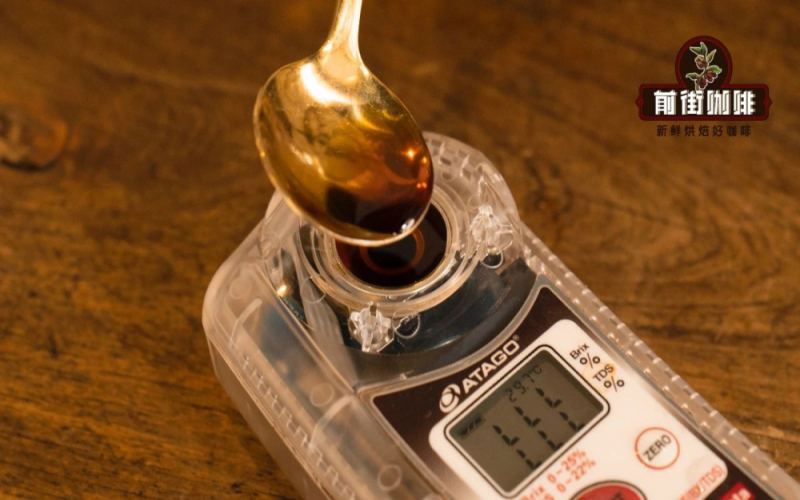
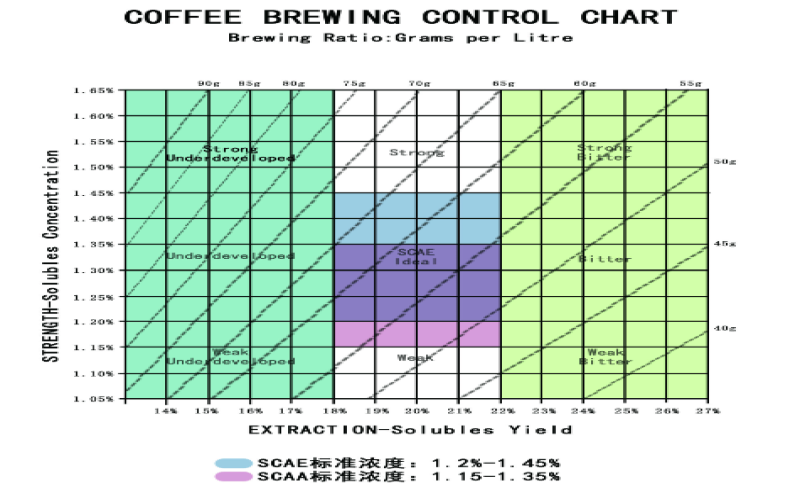
The Golden Cup extraction system is a quality reference framework widely recognized in the global coffee industry, and its core lies in controlling the concentration and extraction yield of the coffee liquid within a specific range. Compiled by FrontStreet Coffee, this article systematically reviews the origins of the Golden Cup standard and the differences in national standards, explains in detail the formulas for extraction yield and concentration, and uses a VST refractometer and a brewing example with Ethiopia Huakui 4.0 to demonstrate how to measure concentration and calculate extraction yield. At the same time, the article also discusses the influence of the pour-over coffee grounds-to-water ratio on flavor, gives a recommended ratio of 1:15 suitable for most bean varieties, and helps coffee enthusiasts build a quantifiable approach to brewing adjustments. [more…]
Gold Cup Extraction Standard Explained: Concentration and Extraction Yield Calculation Methods and SCAA Standard Ranges
In coffee brewing, how to balance flavor and avoid under-extraction or over-extraction is a concern for every coffee enthusiast. The Golden Cup standard provides a widely recognized reference framework, covering the ideal ranges for extraction yield and concentration. This article will systematically review the origins of the Golden Cup standard and the specific values set by coffee associations in various countries, explain in detail the formulas for calculating concentration and extraction yield, and, using the example of Front Street Coffee's Ethiopia Florque 4.0 pour-over, demonstrate how to measure and calculate extraction yield with an ExtractMoJo refractometer, helping you find the flavor balance point that suits you in your daily brewing. [more…]

Espresso Grinding | How Fine Should Espresso Blend Coffee Beans Be Ground for Making Espresso? How to Determine the Grind Size for Espresso Grounds?
For more specialty coffee knowledge, please follow: Front Street Coffee (Frontsteet Coffee). Quite a few friends have reported that after buying espresso blend coffee beans and grinding them at home, they were unable to extract any crema during extraction, and the espresso that came out was overall tasteless, with a very watery feel. When this problem occurs, [more…]
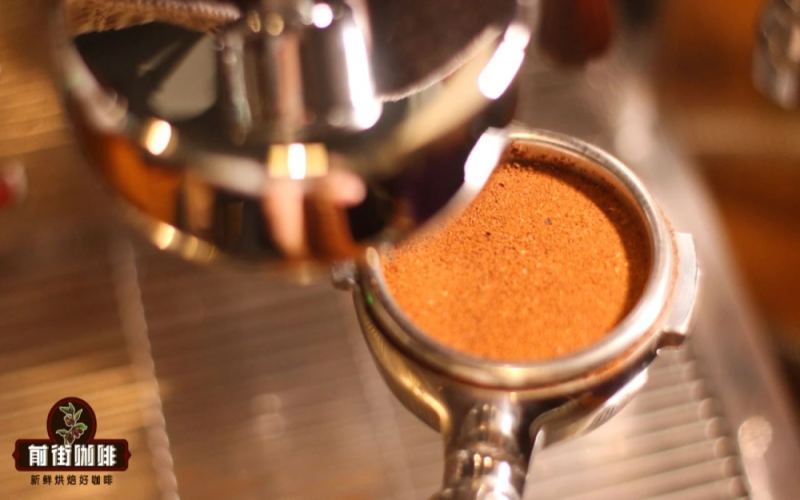
Espresso Ground Coffee Grind Setting Guide: From Grinder Selection to Extraction Parameter Adjustment
Many coffee enthusiasts who make espresso at home often run into problems like fast flow, thin crema, and weak flavor, and the root cause is often an improper grind setting. Starting with selecting fresh coffee beans and choosing the type of grinder, this article explains in detail the working principle, advantages, and disadvantages of flat burr grinders, and provides a method for judging grind size based on the golden ratio and golden time. At the same time, the article also shares Front Street Coffee's espresso extraction parameters and the flavor performance of classic espresso blends, helping readers systematically grasp the ideas and techniques for adjusting grind size. [more…]
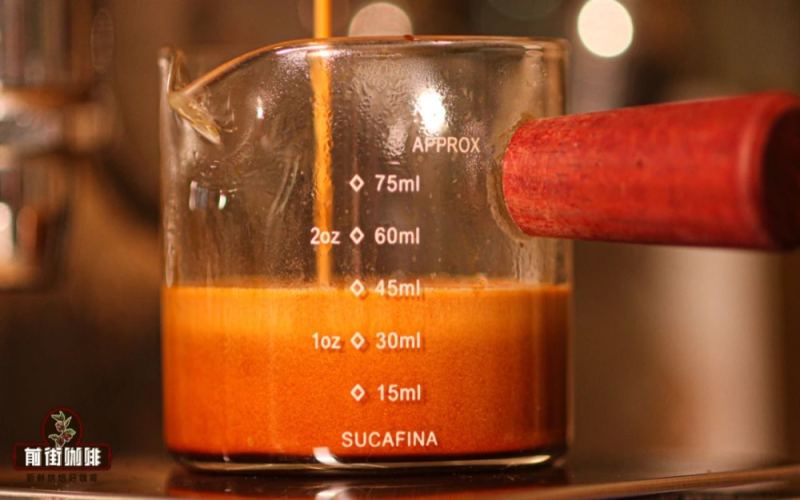
Espresso Extraction Yield | What Is Golden Cup Extraction? What Factors Affect the Flavor of Espresso Extraction? How Is Coffee Extraction Yield Calculated?
For more specialty coffee knowledge, please follow our WeChat public account: Front Street Coffee (FrontStreet Coffee). Those who have read Front Street's popular science articles may have noticed that Front Street rarely specifies exact extraction times the way it does when explaining pour-over coffee, because espresso extraction is about more than just [more…]
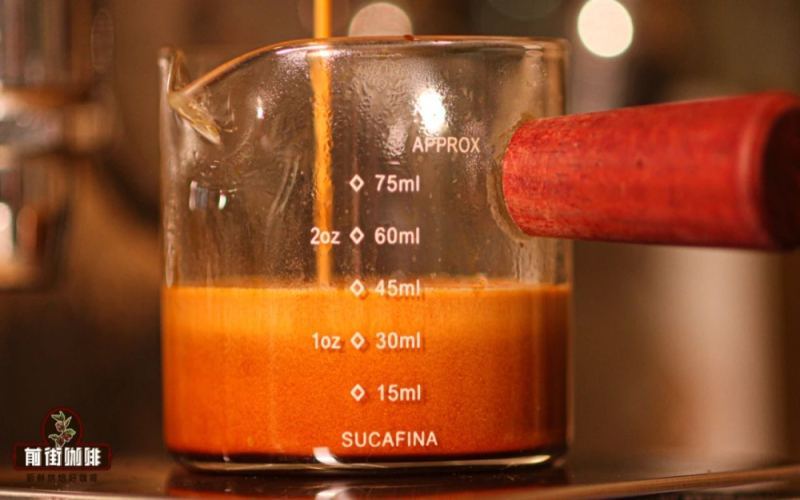
A Guide to Espresso Extraction Time and Pressure Adjustment: Complete Parameter Settings from Dose and Ratio to Flow Rate
Espresso extraction has never been something that can be solved with a fixed formula. The freshness of the coffee beans, the grind size, the brand and model of the espresso machine, the extraction pressure, and the stability of the water temperature—every one of these variables will cause the final cup's flavor to deviate. Precisely for this reason, in its educational articles Front Street Coffee rarely gives an exact extraction time figure the way it does for pour-over. This article will start from the dimensions of dose, coffee-to-water ratio, extraction time, flow rate, pressure, and water temperature, systematically sorting out how to customize a suitable espresso extraction plan for the blend in your hands, and will also introduce the methods for measuring and calculating espresso concentration and extraction yield, helping you find your own cup of good coffee within the Golden Cup reference range. [more…]
How Is the Golden Cup Extraction Yield for Pour-Over Coffee Calculated? A Detailed Explanation from Concentration Measurement to Front Street Coffee Practical Cases
How exactly should the extraction yield and strength of pour-over coffee be calculated? The golden cup extraction yield range defined by the SCAA is 18% to 22%, corresponding to a TDS strength of about 1.15% to 1.35%, while the coffee-to-water ratio falls within the range of 1:12 to 1:15. This theory originates from Dr. Lockhart's scientific experiments in the 1950s, in which he quantified coffee flavor and laid the foundation for the golden cup standard. This article starts from the daily brewing at Front Street Coffee, explains the definitions of extraction yield and strength, the conversion formulas, and how to use a refractometer, and, using beans from Panama's Elida Estate as an example, fully demonstrates the parameter settings, pouring rhythm, and extraction yield calculation process of a staged pour-over, helping coffee enthusiasts understand the practical application and reference value of the golden cup theory. [more…]
How to determine the coffee-to-water ratio for pour-over coffee? The Golden Cup extraction yield and strength calculation and practical methods to avoid over-extraction
Many coffee enthusiasts have encountered this confusion: for the same beans, why does the taste always differ between what you brew yourself and what a Front Street barista brews? In fact, this involves two core concepts—extraction yield and concentration. This article, based on the daily experience of Front Street Coffee (FrontStreet Coffee), systematically explains what coffee extraction yield is, how to measure extraction yield using a TDS concentration meter, and the conversion relationships in the SCAA Golden Cup standard among 18%–22% extraction yield, 1.15%–1.35% concentration, and a 1:12–1:15 coffee-to-water ratio. The article also reviews the historical origins of the Golden Cup theory and, using Front Street's brewing of Panama Elida Natural Typica as an example, provides complete staged pouring parameters and the extraction yield calculation process, helping you brew a cup of pour-over coffee at home that is not over-extracted and has a pleasing flavor. [more…]

A Complete Guide to Espresso Extraction Parameters: A Practical Guide to Dose, Ratio, Time, and Grind Size
To make a well-balanced espresso at home, relying on a fixed recipe alone is far from enough. Different coffee machines, different bean conditions, and even daily climate changes can all cause variations in the extraction result. This article systematically explains how to customize suitable espresso parameters for the blend beans you have on hand, from six dimensions: dose, brew ratio, extraction time, flow rate, pressure, and water temperature. At the same time, for the common problems of overly fast or overly slow flow, it provides troubleshooting adjustment ideas one by one, and introduces how to calculate the extraction yield through concentration testing to determine whether it falls within the golden cup range. The article recommends two espresso beans suitable for beginners to practice with—Front Street Classic Blend and Front Street Strawberry Candy Espresso—to help you find the ideal flavor faster through practice. [more…]
A Complete Guide to Espresso Extraction: Practical Control Methods for Dose, Ratio, Time, and Grind Size
Want to make a balanced espresso at home but keep struggling with unstable flow rate and flavors that swing between sour and bitter? The truth is, there is no one-size-fits-all fixed parameter set for espresso extraction—coffee bean condition, grinder performance, machine pressure, and water temperature can all skew the results. This article approaches the topic from six dimensions—dose, brew ratio, extraction time, flow rate, pressure, and water temperature—and systematically explains how to customize a suitable extraction plan for the blend you have on hand, with specific references based on Front Street Coffee's classic blend and Strawberry Candy Espresso. It also includes methods for measuring espresso concentration and extraction yield to help you use golden cup data as a guide for adjustments, so you can ultimately find the cup you truly enjoy. [more…]
Jamaican Blue Mountain Coffee Flavor Analysis: Blue Mountain No.1 Characteristics and a Detailed Explanation of CIB Grading Standards
Jamaican Blue Mountain coffee is hailed as the crown jewel of the coffee world, with Blue Mountain No. 1 being the pinnacle representative. This article will take you deep into the origin environment of Jamaican coffee, the CIB official grading system, as well as the unique taste and rigorous certification process of Blue Mountain No. 1. From altitude classification to screen size standards, from region restrictions to oak barrel exports, we comprehensively analyze the extraordinary charm of this world-class coffee. At the same time, the Jamaican Blue Mountain No. 1 recommended by Front Street Coffee will also present you with the most authentic flavor experience. [more…]

COE competition and coffee cup testing scoring criteria
Last month, Qianjie shared with everyone the scoring system of cup testing, among which we briefly mentioned COE. In daily life, the word COE also often appears on the labels of some beans. This immediately aroused everyone's curiosity: What is COE? [more…]
Understanding Coffee Bean Grading Standards Through Blue Mountain Coffee: Screen Size, Barrel Packaging, and Export Regulations Explained
Jamaican Blue Mountain coffee is globally recognized as one of the top coffees, but do you know how it is graded? This article will guide you through the basis for grading Blue Mountain coffee—screen size—and the strict cupping confirmation process. From No. 1 to No. 3, coffee beans of different screen sizes show no difference in taste, but there is a distinction between wooden barrels and burlap sacks for green bean packaging. Barrel-packed Blue Mountain coffee also comes with a certificate of origin, and the barrel is printed with information about the estate and importer. In addition, the Jamaican government has clear regulations on the export of defective beans and coffee beans with taste issues. Front Street Coffee reminds you that understanding this grading knowledge helps in identifying authentic Blue Mountain coffee. [more…]
A Comprehensive Analysis of Jamaican Blue Mountain Coffee Bean Grading Standards and Barrel Export System
Blue Mountain coffee, as a representative of the world's top specialty coffee, has extremely strict origin protection systems and grading standards. Jamaican law stipulates that only coffee produced in the Blue Mountain region may bear the name Blue Mountain. High-grade Blue Mountain coffee is classified by screen size into No. 1, No. 2, and No. 3 grades, and all must be exported in wooden barrels. This article will provide a detailed explanation of the basis for Blue Mountain coffee's grade classification, wooden barrel packaging specifications, the certificate of origin system, and export restrictions on damaged and defective beans, helping coffee enthusiasts fully understand the key points for identifying authentic Blue Mountain coffee. Front Street Coffee reminds you that when purchasing Blue Mountain coffee, pay attention to the roast level and import channels to avoid buying inferior products passed off as genuine ones. [more…]
The grading system of Ethiopian coffee beans, the Yirgacheffe G1 and G2 grades.
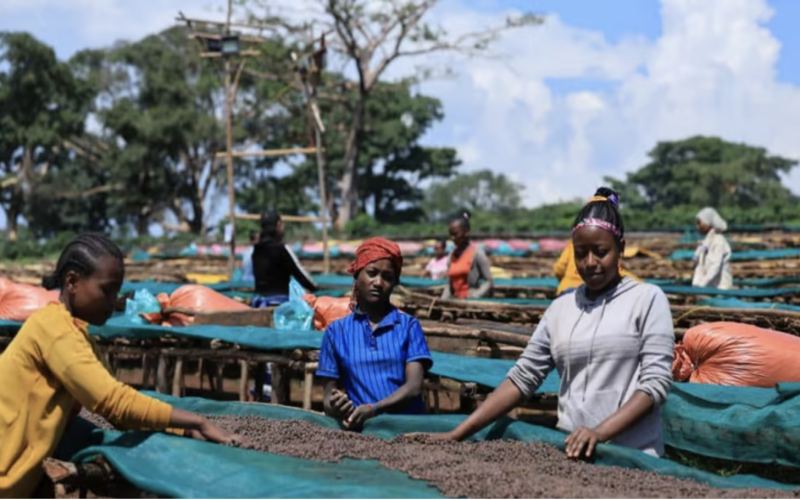
We know that the grading method of coffee beans usually depends on the actual situation of the growing country, such as being divided according to the size of the coffee beans, like Kenyan coffee; being divided according to the altitude, like Blue Mo [more…]
A Detailed Guide to Jamaican Blue Mountain Coffee Grades: Grade 1, Grade 2, Grade 3 Specifications and Authentic Price Reference
Jamaican Blue Mountain coffee is world-renowned for its unique flavor and strict controls. Jamaican law stipulates that only coffee beans grown in the Blue Mountain region may bear the name "Blue Mountain." High-grade Blue Mountain coffee is divided into three grades—No. 1, No. 2, and No. 3—corresponding respectively to screen size standards of 17–18 mesh and above, 16 mesh, and 15 mesh. The green beans of all three grades must be packed into wooden barrels for export, with the barrel bearing the estate name, importer's abbreviation, and batch information, along with a government-certified green certificate of origin. Understanding these grades and export regulations helps coffee enthusiasts verify authenticity and make informed purchases of genuine Blue Mountain coffee. Front Street Coffee recommends that consumers pay attention to the roast level and packaging format to judge the true quality of the Blue Mountain coffee in their hands. [more…]
If you place a filter paper at the bottom of the portafilter basket, what changes will occur to the espresso's fines and extraction yield?
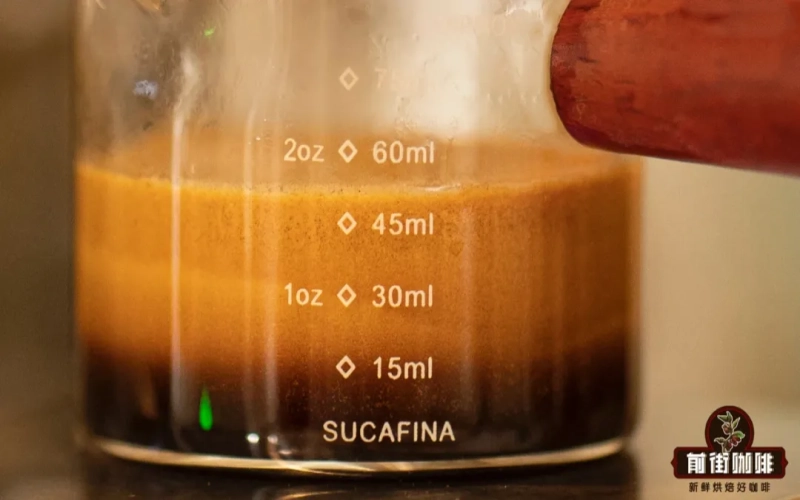
In the making of espresso, fines have always been a love-hate presence. They may bring rich crema, but they can also clog the portafilter basket, slow down the flow, and add bitterness. There are two common methods for removing fines on the market: one is to skim off the surface crema after extraction, which is simple and direct; the other is to pre-place a moistened circular filter paper at the bottom of the portafilter basket. The latter sounds gentle, but does it really not interfere with extraction? Front Street conducted a comparative experiment for this: the same 20 grams of coffee, 40 milliliters of liquid weight, one regular extraction, and one with filter paper added at the bottom. The result was that the cup with filter paper took less time, and both concentration and extraction yield were slightly lower, but the fines almost disappeared, and the taste was cleaner. This shows that adding filter paper is indeed feasible, but the grind or parameters must be readjusted to make up for the lost flavor. [more…]